The cut
Why choose French grass-fed beef?
By À Côté ·
When choosing a steakhouse, cooking does not tell the whole story. The animal's origin, breed, diet and farming method matter from the very first bite. These are tangible factors: they influence the cut's texture, structure and flavour.
For meat lovers, understanding these criteria means knowing what you are choosing. French grass-fed beef is appreciated as much for what it is as for the way it is then prepared.
Why does the origin of the meat matter?
A clearly identified origin
Choosing French beef means being able to know where it comes from. The farm, supply chain and animal's journey should all be identifiable. For guests, this transparency provides a simple reference when choosing a cut.
Farming on a human scale
A significant part of French cattle farming relies on family-run farms and herds cared for every day. Grazing, the rhythm of the seasons and attention to the animals are all part of this model.
What matters on the plate are the facts: a dedicated beef breed, a known diet, a clear origin and a supply chain the restaurant can explain.
Consistency in selection
For a restaurant specialising in meat, working to precise criteria helps maintain consistent quality from one cut to the next. That consistency comes through the selection of breeds, farms and suppliers, followed by the same care during cooking.
A trusted relationship with suppliers
Choosing meat also depends on the relationship between farmer, butcher and restaurateur. When everyone knows the product and shares the same selection standards, its origin is easier to understand and its quality easier to follow.
Why are French beef breeds so highly regarded?
Different qualities in the meat
France has several dedicated beef breeds, each with its own grain, texture and character. These differences make it possible to select meat suited to the desired cut and the way it will be cooked.
- Limousin beef is prized for its fine grain, tenderness and juiciness. À Côté notably favours Limousin cattle from the Creuse, in the heart of the former Limousin region—a place connected to the restaurant's family history and its cattle-farming grandfather.
- Charolais offers generous meat with a fine balance of texture, fat and juiciness.
- Aubrac has firmer flesh and a satisfying bite without being tough. Its character on the palate is different and immediately recognisable.
These breeds tell the story of different terroirs and farming practices. At the table, the point is not to rank them but to understand what each brings to the meat.
Why does a grass-based diet change the meat?
The importance of pasture
A grass-fed animal more closely follows the rhythm of pasture and the seasons. It moves, grows gradually and eats a diet linked to its environment. For the restaurant, this farming method is one of the criteria considered when selecting a cut.
A gradual pace of growth
Grass and hay support more gradual development than accelerated fattening systems. This difference can be found in the meat's structure, texture and behaviour during cooking.
Natural fat
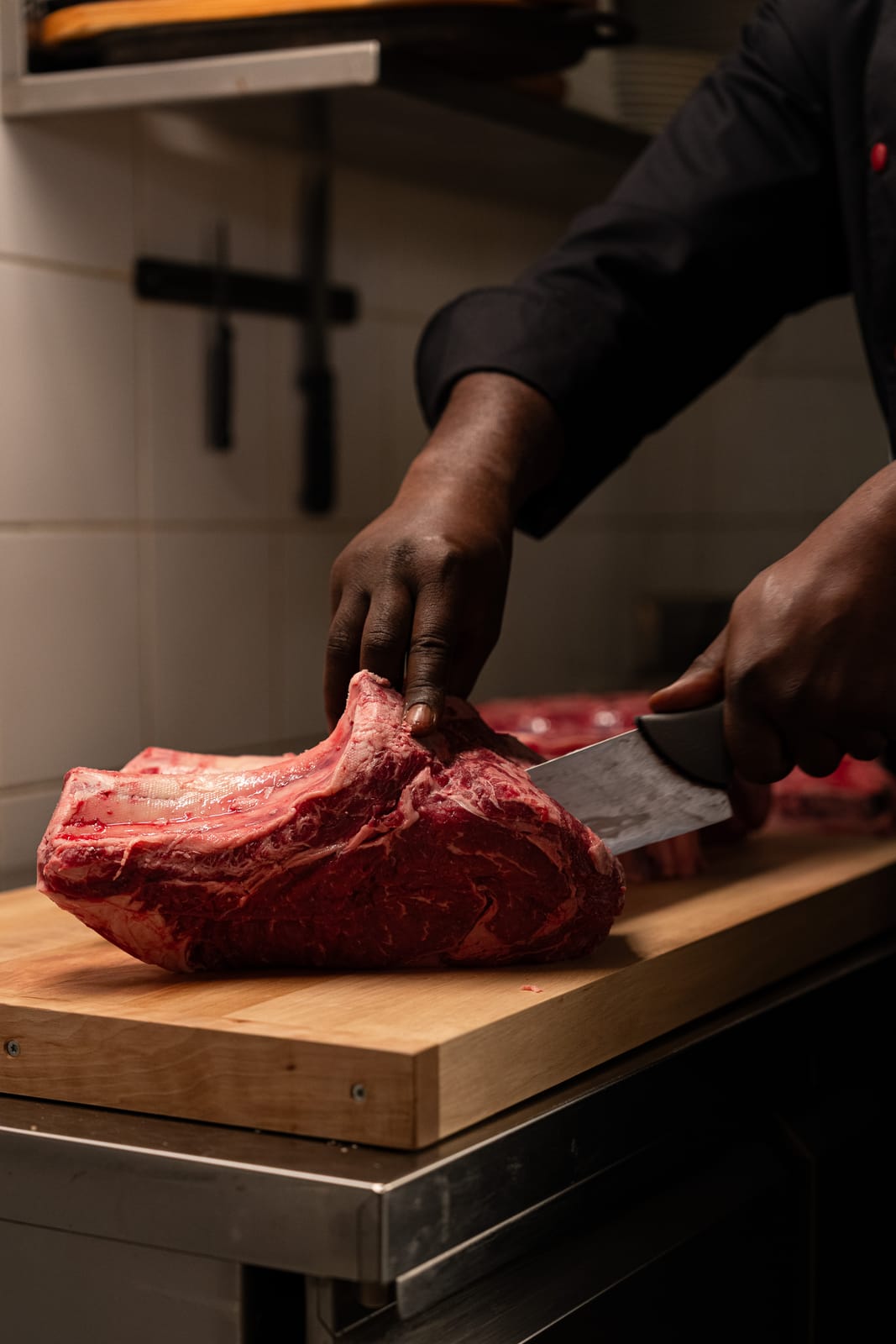
Fat plays an essential role in a prime rib. Distributed within and around the muscle, it melts with heat, bastes the flesh and contributes to flavour. On the plancha, the rib is first placed on its fattiest edge so that this natural fat can then be used to sear the cut.
Texture that keeps its character
Good meat should not aim only for tenderness. It should retain texture, bite and flavour that reflect its breed and farming. This is the balance found in a cut selected to be simply grilled and shared.
How can you recognise quality meat in a restaurant?
The fat and appearance of the cut
Before cooking, the meat's appearance already provides information. Its colour, fat distribution, thickness and carving all help you understand the product. Natural fat is especially important on a prime rib: it protects the flesh and plays a direct part in cooking.
Breed and farming before ageing
À Côté does not serve dry-aged meat. Its choice is different: working with well-raised cattle exclusively from dedicated beef breeds, with a clearly identified origin and diet.
The restaurant does not seek to correct the product through long ageing. It prefers to begin with beef that already has its tenderness, texture and flavour, then prepare it with precise cooking.
Mastering the cooking
A fine raw material needs little artifice. The prime rib goes onto a very hot plancha, beginning with its fattiest edge. The fat melts gently, then each side of the cut is seared in this natural fat.
The heat forms a Maillard crust. Then comes the rest, essential for redistributing the juices. The rib is carved, placed in a cast-iron pan and finished for a few minutes in a very hot oven at around 240°C, just before service.
Clear information
A steakhouse should be able to say simply what it serves: the origin, breed, farming method and supply chain. At À Côté, the idea fits into a few words: everything is done in France. No theatre, no invented story.
What is À Côté's approach?
Limousin and Charolais beef raised in France
À Côté is a steakhouse at 16 rue La Fayette in Paris's 9th arrondissement. The restaurant works with French beef breeds, particularly Limousin and Charolais, raised in France on grass and hay.
For Limousin beef, À Côté particularly favours farms in the Creuse, at the heart of the former Limousin region. This choice also has a family dimension: it is the home region of the restaurant's cattle-farming grandfather.
A clearly identified origin
Provenance is part of choosing the cut. The restaurant favours a French supply chain and information that is easy to share with guests: breed, origin and farming conditions. The seriousness lies in this clarity, not in a complicated speech.
House cooking at the service of the product
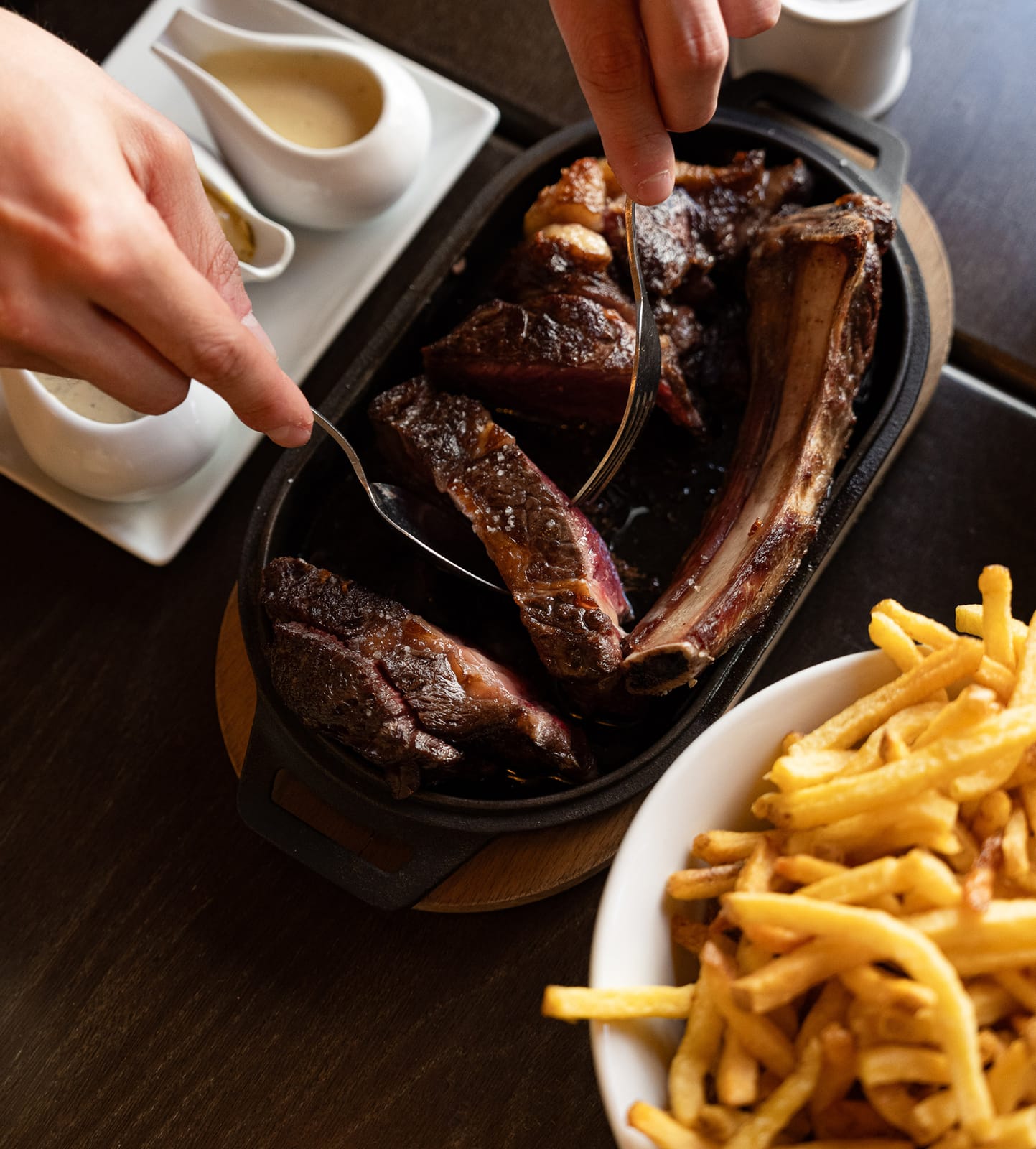
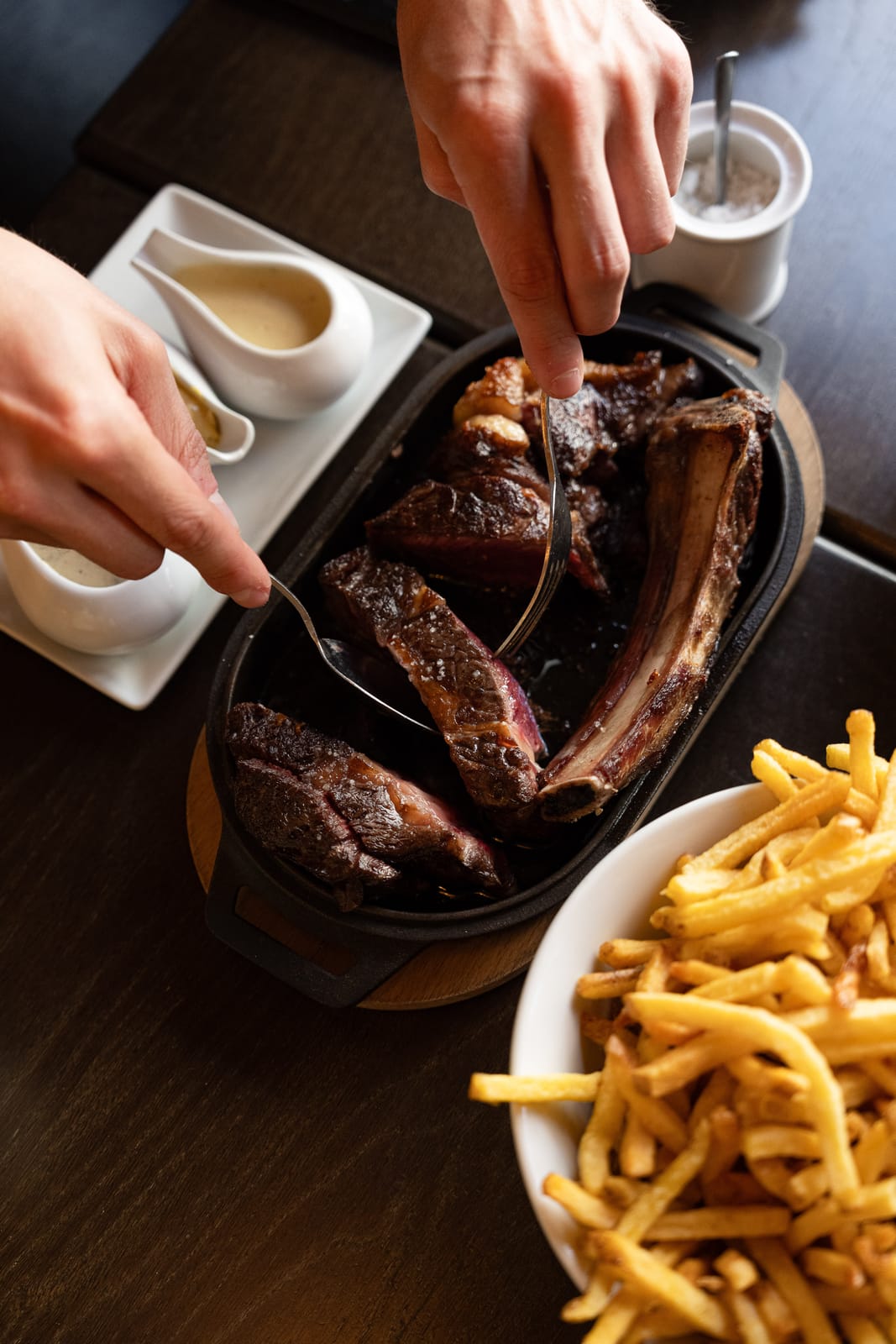
The meat is seared with precision so the product can speak for itself. Alongside it, homemade fries, sauces prepared in-house and bone marrow complete the rib without drawing attention away from its central role.
The cut arrives at the centre of the table. Everyone helps themselves. This is where the product becomes a meal.
An address where you can experience a French tradition
À Côté is a place to come for lunch or dinner and share an iconic dish of French gastronomy: a prime rib chosen by weight, cooked on the plancha, served with homemade sides and a French wine cellar, with time to remain at the table.
The restaurant keeps the spirit of a Parisian bistro: warm, direct and attentive. Meat is the centre of gravity, but the memory also comes from the conversation, the service and the moment shared.
Why choose a restaurant that specialises in meat?
A specialist restaurant knows its product. It can explain the breed, origin, weight and cooking. It also knows how to advise without making the meal complicated.
At À Côté, the French prime rib to share sums up this approach: a fine raw material, precise technique and a table where you take your time. A simple way to discover French grass-fed beef and, with it, a French dining tradition in the heart of Paris.